
Why Britain and Ukraine Need Each Other on Infrastructure Security

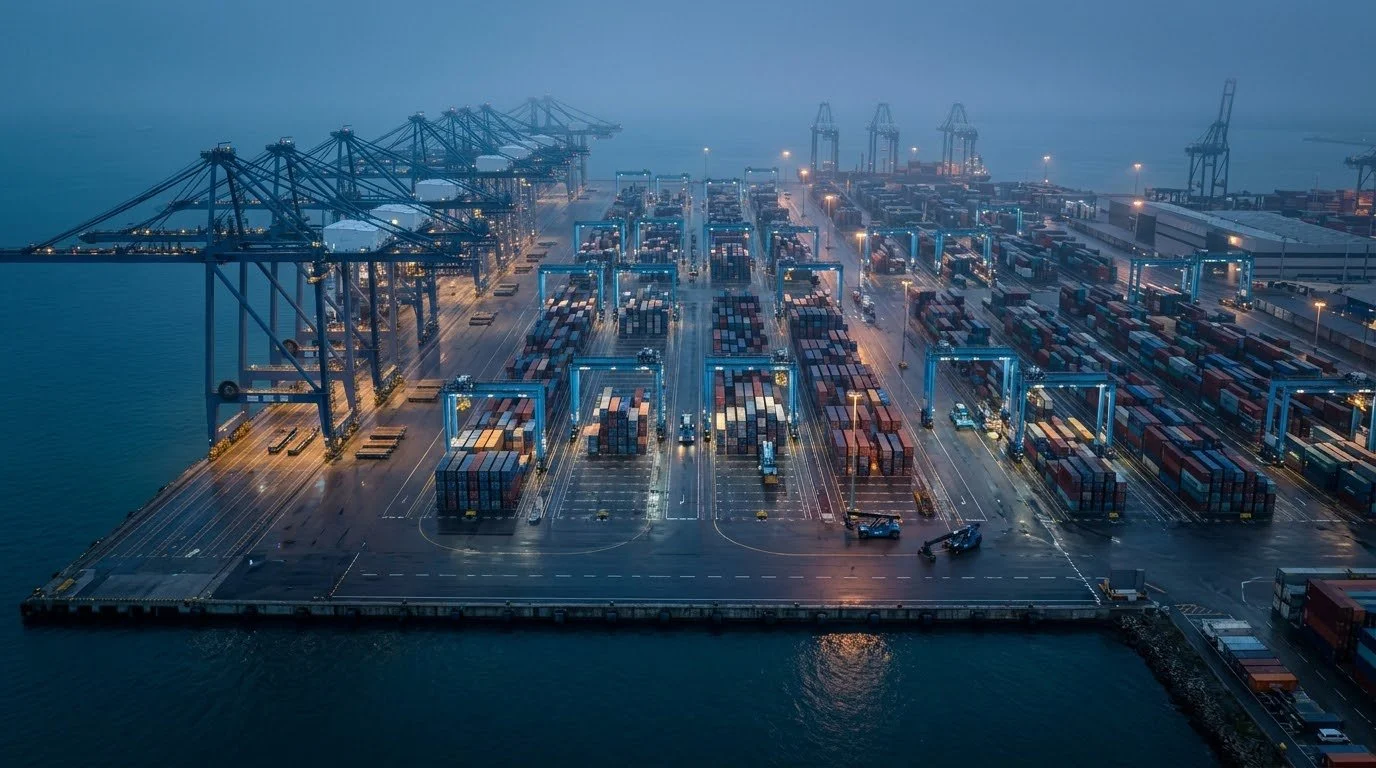
In April 2026, at the Port Infrastructure Protection Forum in London, Ukraine's Ambassador to the UK told a room of British ministers and industry leaders something most of them hadn't fully priced in yet — the warning above.
Six months later, Britain got a domestic version of the same warning. The Ministry of Defence confirmed a months-long Russian submarine operation mapping the undersea cables that carry roughly 99% of the UK's international internet traffic, alongside subsea gas pipelines. The then Defence Secretary, John Healey, warned Moscow that any attempt to damage them would carry serious consequences. Not long after, the House of Commons Defence Committee heard that Britain lags behind Russia in undersea security altogether — leaving infrastructure underpinning trillions of pounds in trade exposed.
Two countries, one problem. But only one of them has actually had to solve it under fire.
“The cost of strategic strikes has become cheap. It is no longer about expensive cruise or ballistic missiles. Now cheap, scalable and accessible weapons systems can inflict significant losses on concentrated energy and logistical infrastructure. Meanwhile, current air defences are unable to protect against such attacks.
”

The Experience Britain Can't Simulate
Ukraine's infrastructure has been a live target for years — ports, power stations, logistics hubs, all of it. That's not a footnote to the war; for the sectors now scrambling to protect Britain's ports and grids, it's the single most valuable thing Ukraine has to offer. Nobody builds that kind of operational knowledge in a lab.
Britain, for its part, has what Ukraine has had far less time and capacity to build during wartime: a world-leading research base, serious capital, and industrial infrastructure that can take a working idea and scale it fast.
“Ukraine has learned, under fire, what the rest of us are only beginning to plan for. Britain has the science, the investment and the platforms to turn that knowledge into something the whole world can use. Neither side can do this alone — and this is the moment to build it together.”
That exchange is no longer hypothetical. A new UK-Ukraine defence pact now gives British engineers access to Ukraine's Avengers AI Labs battlefield sensor data — millions of tracked targets, gathered from thousands of frontline cameras and sensors. A joint AI cell is already adapting the technology for civilian use: airports, prisons, railways, power stations. It sits inside the wider UK-Ukraine Enhanced Security and Defence Industrial Collaboration Declaration, signed in London this March as part of the two countries' 100 Year Partnership.
That recognition now runs both ways. The Declaration doesn't just commit resources — it names the reason for the partnership: the ingenuity of Ukrainian specialists, matched with British industrial capacity, as a determining factor in shared security. Zaluzhnyi has made the same case repeatedly since. Ukraine's infrastructure-defence experience isn't a national footnote; it's the foundation partners should be building their own security architecture on.

What Turning Conversation Into Something Concrete Actually Means
For the Oxbridge Foundation, this isn't a new instinct — it's the operating principle behind everything the organisation has built over the past two years.
“We bring together Ukrainian and British experience — government, public and private sectors — around the practical delivery of joint projects. And what we’ve found is that the result depends less on the calibre of the people in the room than on whether we can turn conversation into something concrete: commercial, investable, or genuinely useful to people.”
Why It's Not Just About Ports Anymore
The threat picture has widened since April. What started as a conversation about port security now stretches into cybersecurity, autonomous systems, and — increasingly — the parts of critical infrastructure nobody thinks about until they fail: food systems, agricultural supply chains, the sensors and monitoring networks that quietly keep everything else running.
Some of that shift is also just realism about method. Much of the pressure on Western infrastructure now sits below the threshold of open conflict: sabotage, surveillance of undersea cables, the kind of activity that's hard to attribute and easy to underestimate. Ukraine has learned to treat that as a design problem, not a policy footnote. Britain is only starting to.

People Are Infrastructure Too
None of this scales without people who actually know how to do it, and that's the gap nobody's pricing correctly yet. At the April Forum, panellists kept circling back to the same point: a critical shortage of qualified specialists is now the main obstacle to building this kind of security architecture, not funding or political will. One term came up more than once — sea blindness, the systemic undervaluing of maritime infrastructure's role in national security, right up until it fails.
The Oxbridge Foundation's answer to that has already been tested. In December 2025, fifteen scholars spent five days at Keble College, Oxford, and came out the other side with five working start-ups. The winning idea, NourishU, came from a displaced Ukrainian student from the University of Aberdeen, working alongside teammates from Italy, Afghanistan and Kenya.
“This isn’t about supporting Ukraine or supporting Britain. It’s about two countries building something neither could build as well alone, at the one moment that’s actually possible”

One Platform, Not Two Events
The Foundation's next step is to bring two years of that experience into a single platform, rather than two separate initiatives running side by side. That's why the Bootcamp and the Forum now share a week, a jury, and a closing stage. One builds the talent pipeline; the other gives it an audience that can actually act on what it sees.
On 19–23 November 2026, the Bootcamp returns to Oxford, and its final day is also the day of the Foundation's new International Forum on Critical Infrastructure, where finalists present their solutions to the same government and industry audience discussing the threats those solutions are meant to address.
The Window That's Open Right Now
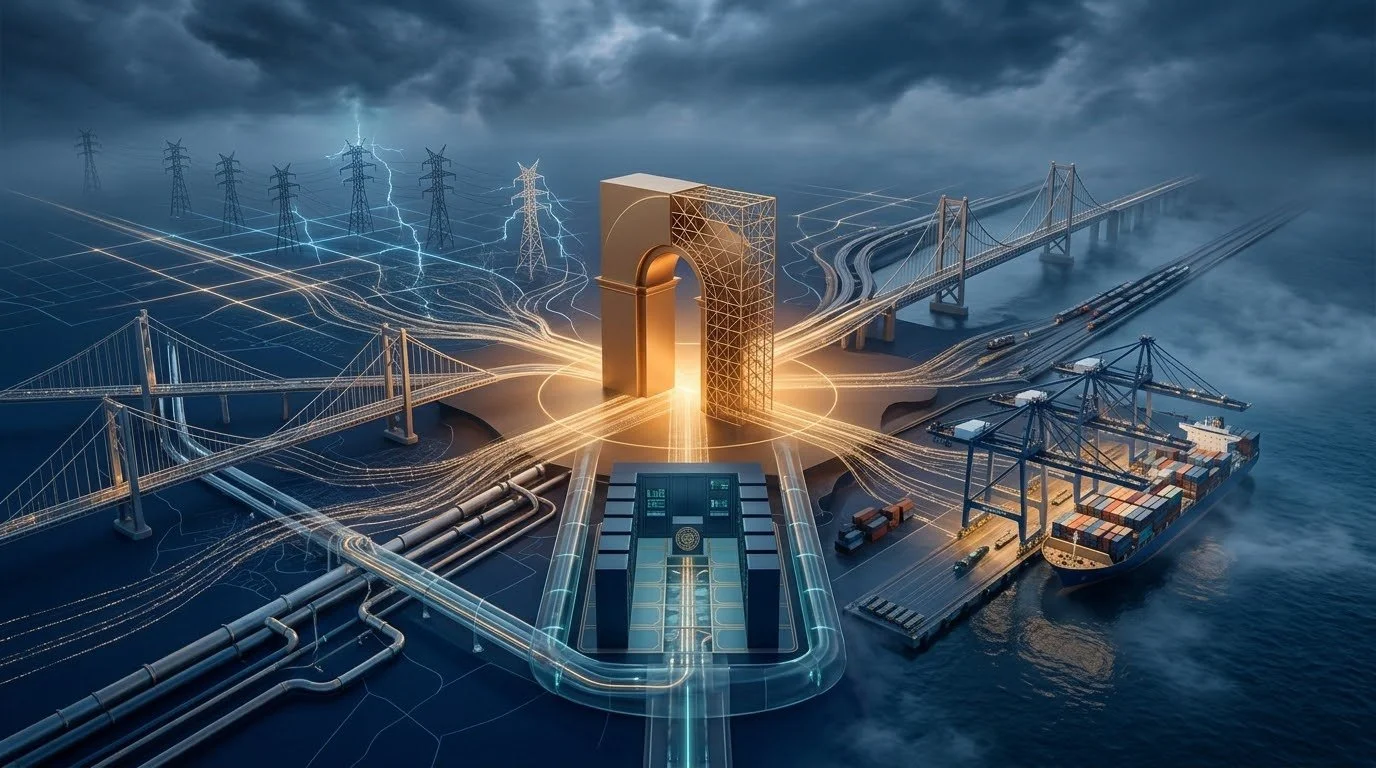
Every new security relationship has a moment when the standards haven't been set yet, when the people in the room are still deciding what “good” looks like rather than adopting it from somewhere else. For UK-Ukraine infrastructure cooperation, that moment is now — not in three years, once the frameworks have already been written by someone else.
Neither government nor industry gets there by waiting to see who moves first. Ukraine has the tested experience; Britain has the platform to scale it. The organisations that show up to that conversation early are the ones who end up shaping it.
That's what International Forum on Critical Infrastructure is for.